
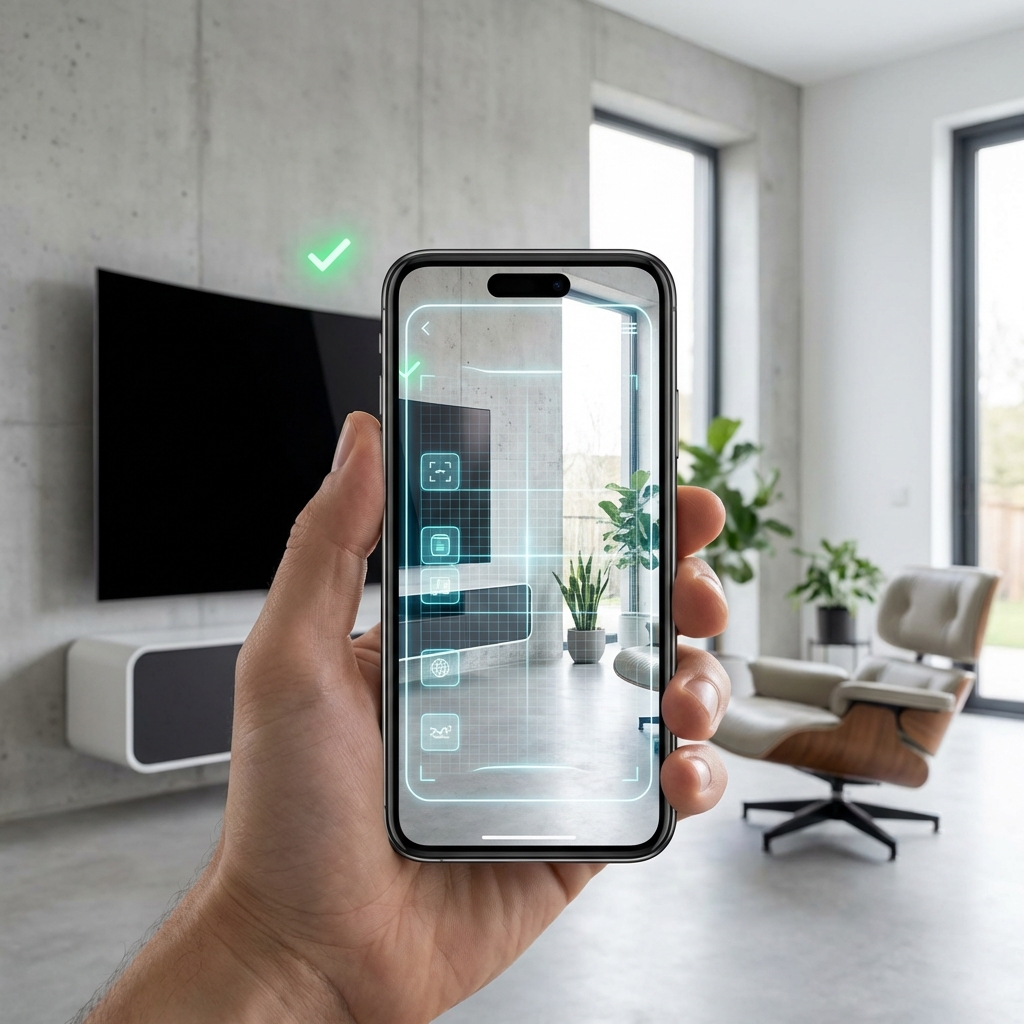
The 20-Minute Home Audit: How to Document Your Wealth Before the Next Fire Season
For homeowners in high-risk zones, "Fire Season" is no longer a seasonal event—it is a perennial threat. As the sky turns orange and evacuation warnings flicker on your phone, the last thing on your mind is the specific model number of your refrigerator or the brand of the suits in your closet.
Yet, this lack of documentation is exactly what leads to the "second disaster": an insurance settlement that covers only a fraction of what you’ve actually lost.
Most people procrastinate on home inventories because they imagine it requires a clipboard, a camera, and an entire lost weekend. It doesn't. By focusing on forensic-level proof for high-value items, you can complete a comprehensive home audit in 20 minutes. Here is how to document your wealth before the next ember flies.
Phase 1: Target the "Dispute Zones"
Insurance adjusters rarely fight you on the big-ticket items like the roof or the framing; those are calculated by square footage. They fight you on Personal Property (Coverage C).
Adjusters are trained to default to the "Standard Grade" for any item that isn't specifically documented. If you list "5 Designer Handbags," they will pay out for five generic totes unless you have the forensic proof to show otherwise.
High-Value Items Often Disputed:
Electronics & Home Office: Professional-grade monitors, specialized gaming rigs, and high-end audio equipment.
Kitchen Assets: High-performance appliances (Vitamix, Wolf, Sub-Zero) and premium cookware sets.
Designer Goods: Apparel, watches, and handbags that carry significant brand-name value.
Collections: Rare books, wine, or hobby equipment (high-end bicycles or golf clubs).
Phase 2: The Forensic Walkthrough
To move through your home in 20 minutes, you must stop thinking like a cataloger and start thinking like a forensic auditor. You don't need to take 1,000 individual photos; you need a strategic series of "Evidence Clusters."
1. The Wide-Angle Baseline (Minutes 1-5)
Stand in the doorway of each room. Take 2–3 wide-angle photos that capture the entire space. This establishes the "baseline" of your lifestyle. These photos prove the quality of your flooring, the density of your furniture, and the general standard of your belongings. If you have a $10,000 rug, an adjuster needs to see it in its environment to validate its presence.
2. The "Open-Door" Cluster (Minutes 6–15)
This is where homeowners lose the most time—don't make the mistake of laying items out on a bed. Instead, use the Open-Door Method:
- Closets: Open the doors and take 3–4 photos of the hanging racks and shelving. This proves the volume of clothing. Adjusters can identify brand quality (e.g., the silhouette of a tailored suit or a designer coat) from these shots.
- Drawers: Pull out your kitchen, jewelry, or tech drawers. Take one clear top-down photo per drawer. This creates a "visual receipt" of your silverware, accessories, or components that is impossible to dispute.
- Cabinets: For kitchens and bathrooms, open the cabinets and photograph the shelves as they are. This proves you own the "sets" (e.g., 12-piece knife block, full sets of glassware).
3. The Forensic Close-Up (Minutes 16–20)
Focus exclusively on items with a replacement value over $500. For these, you need "Audit-Ready" proof. Snap a clear, legible photo of:
- The Manufacturer Label: This is the silver sticker on the back of electronics or the rating plate on appliances. It contains the Model Number and Serial Number.
- The Serial Number: This is the "DNA" of the item. It proves the exact age and model. For example, a "2023 Samsung QLED" is worth $1,500. A "2018 Samsung QLED" is worth $400. The serial number proves which one you have.
- The Brand Badge: For designer furniture or high-end appliances, a close-up of the logo (e.g., Sub-Zero, Herman Miller, Sony) ensures you get paid for the premium brand you actually bought, not a generic equivalent.
Expert Note: In the eyes of an insurance carrier, a serial number is the ultimate form of "Audit-Ready" evidence. It eliminates all ambiguity regarding the age, model, and replacement value of the asset.
Why High-Resolution Photos Beat Video for Claims
While video is easy to capture, it is often a nightmare for insurance adjusters to process. They cannot easily "zoom in" on a blurry frame to verify a serial number, and video files are often too large to be uploaded into their internal claims systems.
By using ClaimReady to convert your photos into a professional, high-resolution PDF, you are handing the adjuster exactly what they want: a static, searchable, and forensic document. You aren't just giving them footage; you are giving them evidence.
The Privacy Paradox: Why Most Inventory Apps are a Liability
As you gather this data, you are essentially creating a digital blueprint of your wealth. This includes photos of your most expensive possessions, your home’s layout, and your address.
Most "modern" inventory apps ask you to upload this data to their cloud servers. This is a massive security risk. A single database breach could provide a "shopping list" for burglars or expose your most private financial information to the dark web.
Furthermore, many of these apps operate on a subscription model, charging you $10 a month just to keep your data accessible. You shouldn't have to pay a "privacy tax" to protect your own home.
The Solution: Local-Only, Zero-Knowledge Documentation
This is where the ClaimReady philosophy changes the game. We believe that your data should be your eyes only.
ClaimReady is a Zero-Knowledge utility. When you use our tool to generate your inventory, nothing is ever uploaded to a server. Your photos, your serial numbers, and your high-resolution PDF report are processed locally in your browser.
Why ClaimReady is the Gold Standard for Fire Season:
No Accounts: No email or password to be leaked in a data breach.
Local Processing: Your photos never leave your device.
Audit-Ready Output: You receive a professional, forensic-grade PDF designed to meet the evidentiary standards of the most skeptical adjusters.
One-Time Utility: No subscriptions. For a single $6.99 payment, you get a tool that can protect $20,000 to $200,000+ in claim value.
Conclusion: 20 Minutes vs. Two Years of Regret
Disasters are unpredictable, but your financial recovery doesn't have to be. If a fire hits tomorrow, do you want to spend the next two years arguing with an adjuster about whether your couch was from IKEA or a custom boutique?
Take the 20 minutes. Perform the audit. Keep the data private.